长期血液透析导管相关性感染病原菌类型及影响因素

打开文本图片集
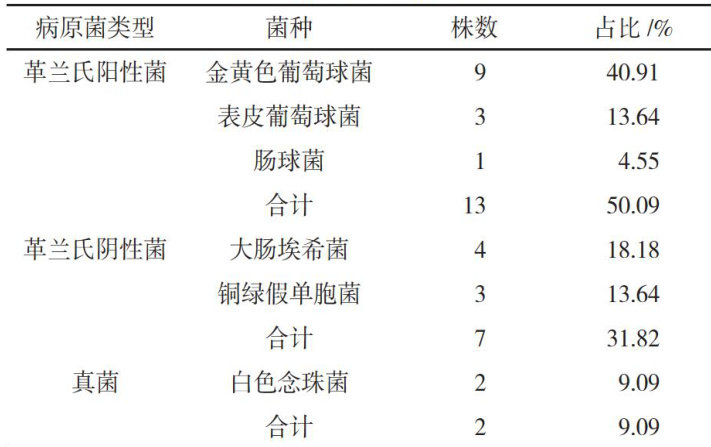
[Abstract]Objective:To analyze the types of pathogenic bacteriaand influencing factors ofcatheterrelated infections (CRIs)in long-term hemodialysis.Method: The clinical data of 66 long-term hemodialysis patients in from August 2O21 to March 2O23 were retrospectively collected.The patients were divided into the occurrence group ( n =22)and the non-occurrence group ( n =44) according to whether CRIs occurred.The types of pathogenic bacteria infected in CRIs patients were statistically analyzed, and the influencing factors of CRIs occurrence inlong-term hemodialysis patients were analyzed.Result: Among 66long-term hemodialysis patients,a total of 22 cases of CRIs occurred, with an infection rate of 33.33% . Through bacterial culture identification, Gram-positive bacteria accounted for the highest proportion (59.09 % ,13/22), followed by Gram-negative bacteria (31.82 % ,7/22),and fungal infections (9.09 % ,2/22). There were significant differences inage,dialysis time,catheterization time,nutritional status,useofantibiotics,andtransferinunsaturation between the two groups ( P <0.05).logistic regression analysis showed that dialysis time ⩾3 years,catheterization time ≥2 weeks,no useof antibiotics,and transferin unsaturation were independent risk factors for CRIs inpatients with long-term hemodialysis( P <0.05).Conclusion:Gram-positive bacteria are the most common pathogenic bacteria in CRIs patients undergoing long-term hemodialysis.Long dialysis duration,long catheterization duration, non-use of antibacterialdrugs,and unsaturated transferrinare independentrisk factorsforCRIsinlong-term hemodialysis patients. Clinicaly,more attention should be paidto this group ofpeople,and corresponding measures should be taken in a timely manner to intervene and reduce the occurrence of CRIs.
[Keywords] HemodialysisCatheter-related infectionsPathogenic bacteria Influencing factors Dialysis time
近年来我国的肾脏疾病患病人数明显上升,血液透析是终末期肾病(ESRD)最主要的治疗方式,能够有效清除体内代谢废物和多余水分,维持内环境稳定,从而延长患者生命,改善患者的生存质量[-2]。(剩余5321字)