广元皇泽寺第28龛的年代、题材及龛前建筑
——兼唐宝历二年《再修西龛佛阁记》新释

打开文本图片集
中图分类号:K879.29 文献标识码:A 文章编号:1000-4106(2025)05-0039-13
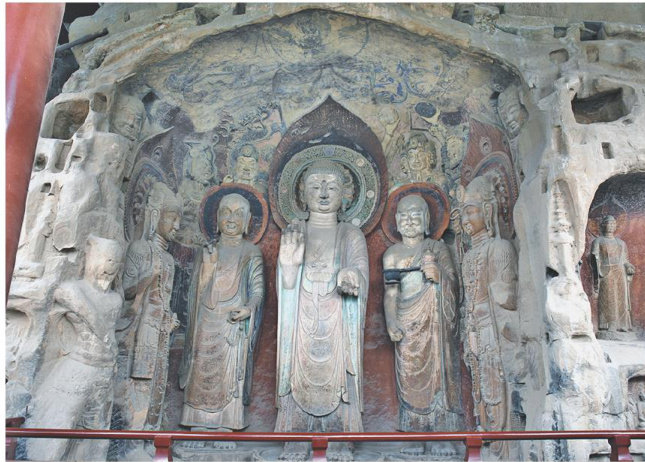
Abstract:Niche28in Huangze Temple in GuangyuanisarepresentativeconstructionoftheBuddhistcliffcarvings innorth Sichuan.Withtheaidofnewlypublishedarchaeologicalmaterials,theauthorhasconfirmedthatniche28wascarvedintheearly 7thcentury,andthatithousesatriadofsculptures thatcanbeidentifiedasacentral Sakyamuni Budda,Avalokiteshvara Bodhisattvaontheleft,and Mahasthamaprapta Bodhisatvaontheright.Anearlierexampleofthisimagecombinationcanbe found intheBuddhiststelemadebythebrothersofCaiSengheinte15thyearoftheTianjianeraduringtheLiangdynastywhichwas unearthedfrom Chengdu,andwhichwas likelyassociatedwiththethemesoftheAvalokitesvara-bodhisatva-mahasthama-prapta-bodhisatva-vyakarana-sutra(观世音菩萨授记经,SutraofPredictionbyAvalokiteshvaraBodhisattva)translatedbyDharmodgatainthe Song periodofthe SouthernDynasties.Theinscription writenonthewalltotheleftofniche13datestohesecondyearof the Baoli era(826CE)during the Tang dynastyand records that EmpressWu Zetian’s parents,Wu Shiyue and Lady Yang,oncerenovatedthe“Buddhistpavilioninthewesterniche.”Although ithas previouslybeen infered thatthe“wester niche"wassomewherenearniche13,basedonthelocationoftheinscription,furtherresearchonthearchitecturalspaceandclif remains has revealed that this construction is more likely to be the architecture in front of niche 28.
Keywords: HuangzeTemple inGuangyuan; cliffcarvings;Shakyamuni Buddha; EmpressWu Zetianandher family
广元皇泽寺摩崖造像现存佛教石龛57个,为北魏晚期至唐代所开凿,分布于大佛楼、五佛亭及写心经洞三个区域[1]。(剩余11156字)
