福州龙瑞寺大雄宝殿须弥座造像的艺术特征与人文价值

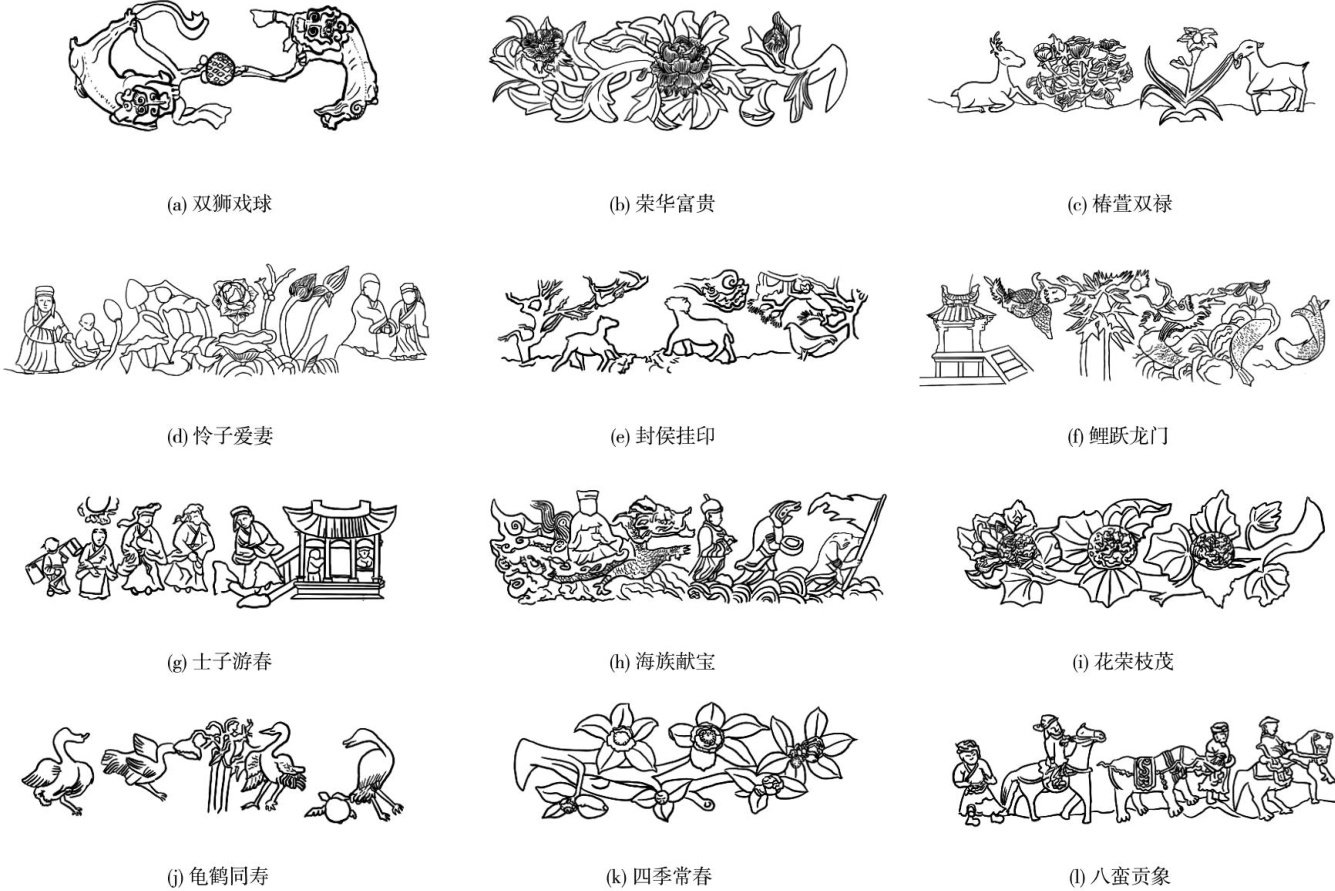
打开文本图片集
中图分类号:K879.1 文献标志码:A 文章编号:2097-3853(2025)05-0488-07
Artisticcharacteristicsand humanisticvalueofstatueson Sumeru seats in Mahavira Hall ofLongrui Temple in Fuzhou
SUN Qun’,ZENG Shiyan² (1.School of Architecture and Urban Planning,Fujian Universityof Technology,Fuzhou 350118,China; 2.School of Art,XiamenUniversity,Xiamen3610O5,China)
Abstract:The statues on the Sumeru base of the Mahavira Hall in Longrui Temple in Fuzhou are based on the stories of the king of the Min Stateat the end of the Tang Dynastyand the Five Dynasties,folk myths,and auspicious folk paterns.They are rich in content ingeniously composed,simple in technique,vivid in form, and direct in expression. These artistic characteristics reflect the people’s longing for peace,happiness,and a good future in the Min State.The statues on the Sumeru base of the Mahavira Hallin Longrui Temple integrate architecture,sculpture,art,religion and folk customs.They retain the folk sculpture style of the Central Plains,possess the characteristics of southern stone carving,and embody the spirit of traditional Chinese aesthetics.They also contain the cultural and ideological concepts of Confucianism,Buddhism,and Taoism, as well as folk customs.Moreover,they share similarities with statues on the Sumeru base of the Dingguang Pagoda in Fuzhou,reflecting the development trend of secularization of Buddhism in China.
Keywords:Fuzhou Longrui Temple;Mahavira Hall;Mount Merustatues;artisticcharacteristics;cultural value
唐末五代时期,中原地区战乱频繁,社会动荡不安,但地处东南沿海的福建偏安一隅,先后历经闽国、吴越国、南唐等政权统治,人民生活相对稳定。(剩余9003字)
