公共文化服务数智化转型:逻辑意涵、风险类型与治理路径

打开文本图片集
Digital Transformation of Public Cultural Services: Logical Implications, Risk ldentification, and Governance Pathways
He Zhiqiang Li Shaohui
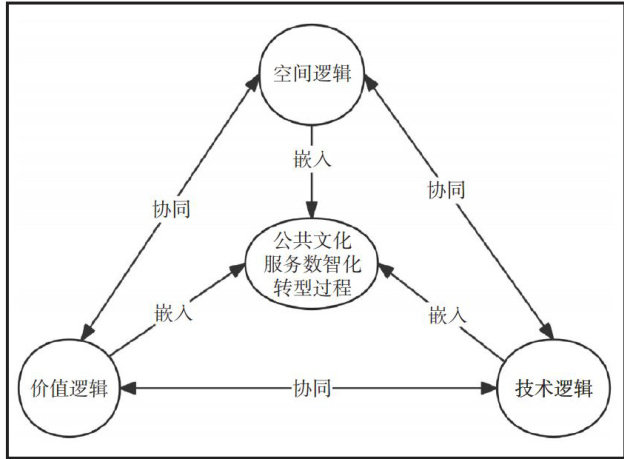
AbstractThedigital-inteligenttransformationofpublicculturalservice governance isan imperativeofour times and the essential pathtoachieving high-qualitydevelopmentin publicculturalservices through digitaland inteligent technologies.Basedonthe"value-space-technology"triadof thedigital-intelligent transformationof publiccultural service governance,thispaperconstructsananalyticalframework foritslogicalimplications,risktypeidentification,and governancepathways.Itclarifies that this transformation encompasses three-tiered logics:avalue logic shifting fromsupplydemand separation toco-creation of value; a spatial logic reinforcing data spatial justice and integrated urban-rural spatialplanning;andatechnologicallogicadvancing fromdigitizationtodigital-intellgence.Itfurtheridentifiestherisks existing inthedigital-intellgent transformationof publicculturalservicegovernance inthenewera,mainlymanifesting as three types ofrisks: value risks such as ethical misconductand algorithmic bias;spatial risks including regional spatial fracturesand disorder in data space;and technological risks encompassng tool-driven alienationand system security challnges.Toenhance theeffectivenessofdigital-intellgent governanceinpublicculturalservices,effortsshouldfocus on:addressingvalue risks through dataethicsreshapingandalgorithmic biascorrection;addressing spatial risksby strengthening regional spatial justice and building trustworthydata spaces;addresing technological risksviaadaptation of digital-intellgent technology alienation and reinforcementof system resilience.These measures will promote the high-quality development of the digital-intelligent governance of public cultural services.
Keywords publiccultural services;digital-intelligent transformation;logical implications; risk paradigms; governance pathways
在以元宇宙、区块链和生成式人工智能等为代表的现代智能技术快速发展的推动下,公共文化服务正处于从传统模式向智能时代快速转型的阶段,其治理体制机制的更新,面临着智能技术飞速发展带来的巨大挑战。(剩余18693字)