京津冀城市群高质量发展的空间演变及影响因素分析

打开文本图片集
中图分类号:F293 文献标识码:A D0I:10.7535/j.issn.1671-1653.2026.01.004
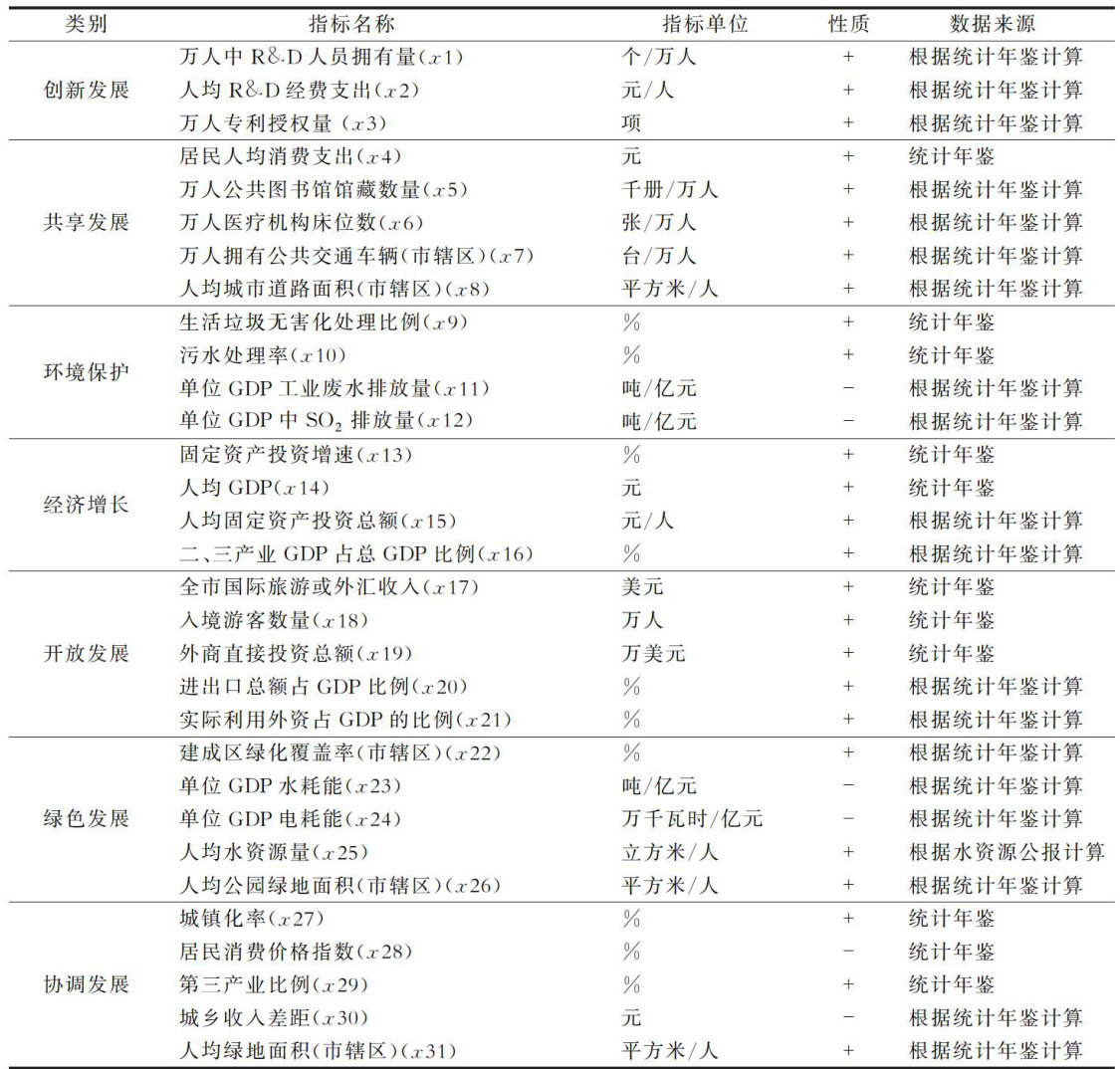
Abstract: In order to explore the high-quality development level and influencing factors of the Beijing--Hebei urban agglomeration,high-quality development evaluation system consisting of 31 indicators was constructed based on seven dimensions: innovation development, shared development,environmental protection,economic growth,open development,green development, and coordinated development. According to the data from 2010 to 2023,the combined weight determination was carried out using CRITIC and entropy methods,and comprehensive measurement was performed using the improved TOPSIS method. The study also utilized a barrier degree model to analyze influencing factors. The results indicate that from 201Olto 2023,the high-quality development of the Beijing--Hebei urban agglomeration experiences some fluctuations but remaines relatively stable overall. The dual core efect of Beijing and is significant,and the high-quality development is basically in a sustained and stable state,demonstrating strong adaptability and resilience. All cities in Hebei Province have shown certain fluctuations in high-quality development,with Handan, Xingtai,Baoding, Zhangjiakou and Chengde experiencing relatively larger fluctuations. The spatial evolution of high-quality development in the Beijing-Hebei region has been gradually improving, showing an obvious agglomeration effect in the core areas. In terms of influencing dimensions,innovative development and open development are the main obstacle factors of high-quality development in the Beijing--Hebei urban agglomeration, while the dimensions of environmental protection and coordinated development have improved in recent years.
Keywords: Beijing--Hebei region;urban agglomeration; high-quality development; comprehensive measurement;spatial evolution;barrier degree
一、引言
我国经济发展已由高速增长阶段转向高质量发展阶段,坚持生态优先、绿色发展,推动城市发展由单纯追求经济增速向高质量发展转变,已经成为我国社会经济发展的首要任务。(剩余12727字)
