GenAI驱动下发现服务范式转型:理论、路径与策略
——基于EBSCO、Clarivate与OCLC的多案例研究

打开文本图片集
中图分类号:G250.7 文献标识码:A 文章编号:1003-7136(2026)03-0015-10
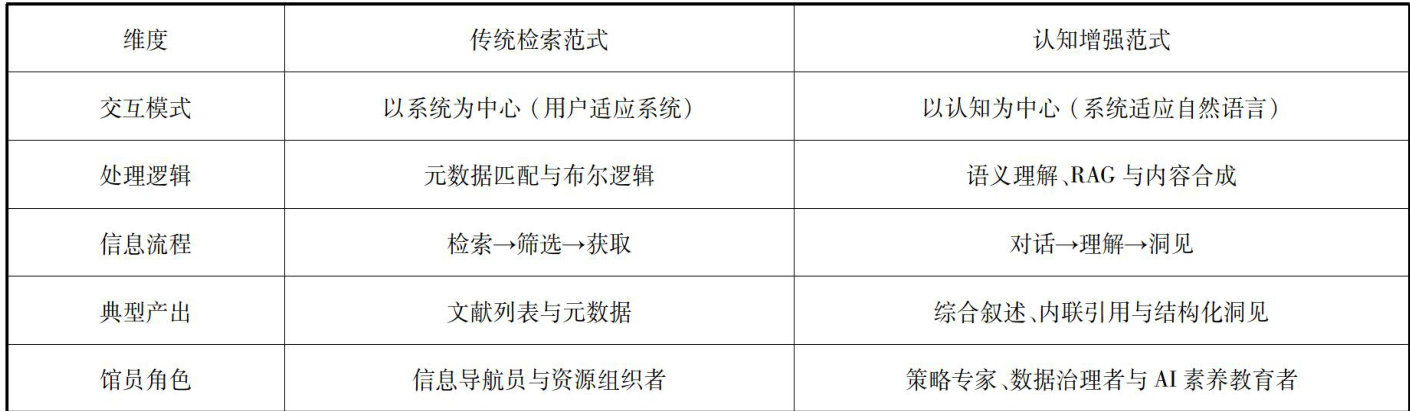
Abstract:Generative artificial intellgence (GenAI)is influencing technical pathand user interaction inlibrarydiscovery services,promoting the instrumental discovery with retrieval ranking as the core,and gradually transforming to the "cognitive enhancement" paradigm that emphasizes semantic understanding,content generation and process support.Using a multiple-case study approach,this paper selects three major international academic information service providers:EBSCO,Clarivate,and OCLC,and compares the functional mechanism and implementation paths of their GenAI-related products.The findings indicate that the applicationof GenAI in discovery services has covered along diferent pathways,involving front-end interaction,middle-end screening,andback-end organzation.Specifically,EBSCO embeds relevant functions into literature screening and content understanding,Clarivate focuses on thetransformation of conversational interactionatthe discovery entry point,and OCLC applies GenAI to back-end workflows such as cataloging support and resource sharing. Based on this comparison,and drawing onthe Technology-Organization-Environment(TOE)framework,this paper puts forwardthe key considerations and localization implementationsuggestions forlibraries toadopt GenAI discovery tools,and provides ideas and decision-making references for libraries to evaluate and introduce GenAI discovery tools to reshape discovery services.
Keywords :generativeartificial intellgence;discovery service;cognitive enhancement;conversational search;TOE framework ;tool evaluation
0引言
自20世纪中叶范内瓦·布什(VannevarBush)提出 Memex[1]设想以来,人类对知识发现的追求始终围绕着如何更高效地检索与利用海量信息。(剩余16304字)