永嘉模式:基层文物保护管理队伍建设的机制创新与实践探索

打开文本图片集
中图分类号:K87 文献标志码:ADOI:10.19490/j.cnki.issn2096-698X.2025.06.076-083
CHEN Lei1,KONG Zhonghua²,XIE Yao³,PENG Haiping4,FU Zhengrong (1., 325000;2.省文物鉴定站, 310005; 3.省文物考古研究所, 310012;4.县文物保护管理所, ) (1.Wenzhou Cultural Heritage and Archaeology Institute,Wenzhou Zhengjiang 325Ooo,China; 2.Zhejiang Provincial Cultural Relics Appraisal Station,Hangzhou Zhengjiang 31Ooo5,China;
3.Zhejiang Provincial Institute of Cultural Relics and Archaeology,Hangzhou Zhengjiang 31OOl2,China;
.Pingyang County Cultural Relics Protection and Management Offce,Pingyang Zhengjiang 3254Oo,China)
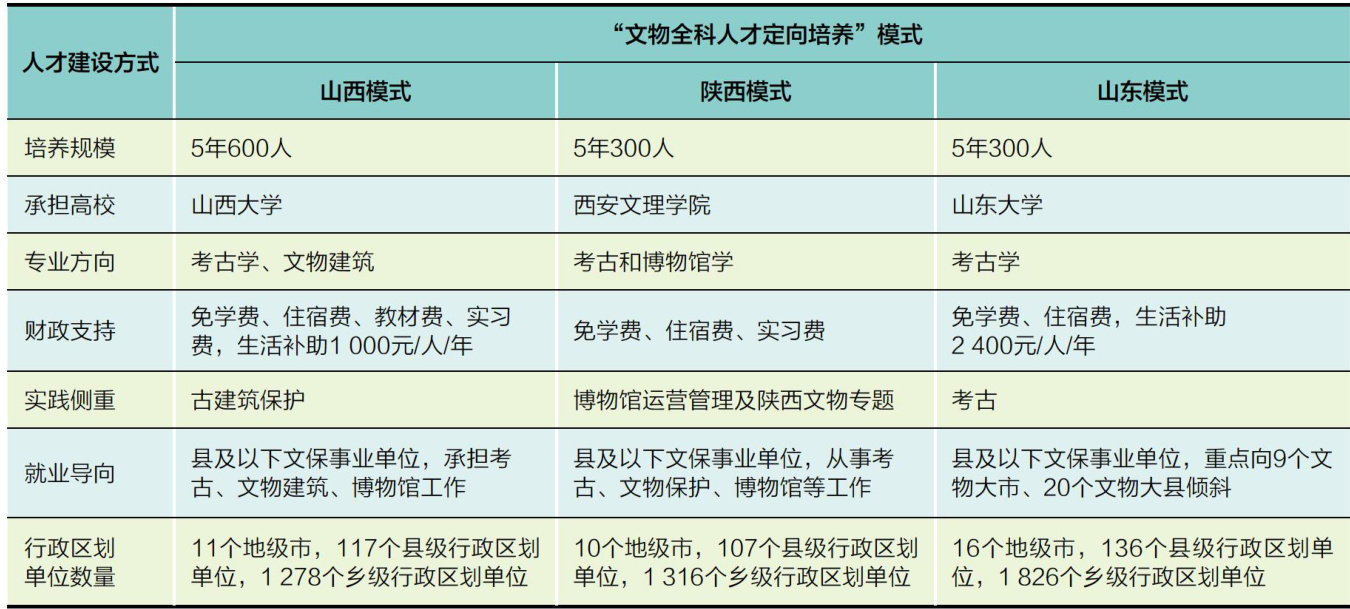
Abstract: In response to the common challenges of weak professional capacity and insufficient dedicated personnel in grassroots cultural heritage preservation, Yongjia County, Zhejiang Province, has pioneered a nationwide “Township Cultural Heritage Administrator” system. This initiative systematically strengthens preservation efforts at the township level through three key measures: delegating established positions to townships, optimizing team structure,and innovating management mechanisms. Compared to the models of “targeted training of multi-disciplinary cultural heritage professionals” based on higher education in Shanxi, Shaanxi, and Shandong provinces, the Yongjia model penetrates deeper at the grassroot level and offers greater operational flexibility. In contrast with social participation models such as Jiangsu’s “Cultural Heritage Inspector”or Sichuan’s “Cultural Heritage Grid Manager”, the Yongjia model demonstrates significant advantages in professional competency and job stability due to its dedicated, officially established team. This model optimizes the county-level cultural heritage work system, enhances eficiency in grassroots preservation, and provides a replicable, scalable practical example for building grassroots cultural heritage teams. It offers significant insights for solving the “last-mile” problem in cultural heritage preservation, with potential for further improvement in systematic trainingand career progression mechanisms.
Keywords: Yongjia model;grassroot cultural heritage preservation;team building;mechanism innovation;practicalexploration
“属地管理”原则自1982年《中华人民共和国文物保护法》确立后,一直是我国文物管理体制的基石。(剩余10500字)