脑卒中患者创伤后应激障碍与生活质量的相关性研究

打开文本图片集
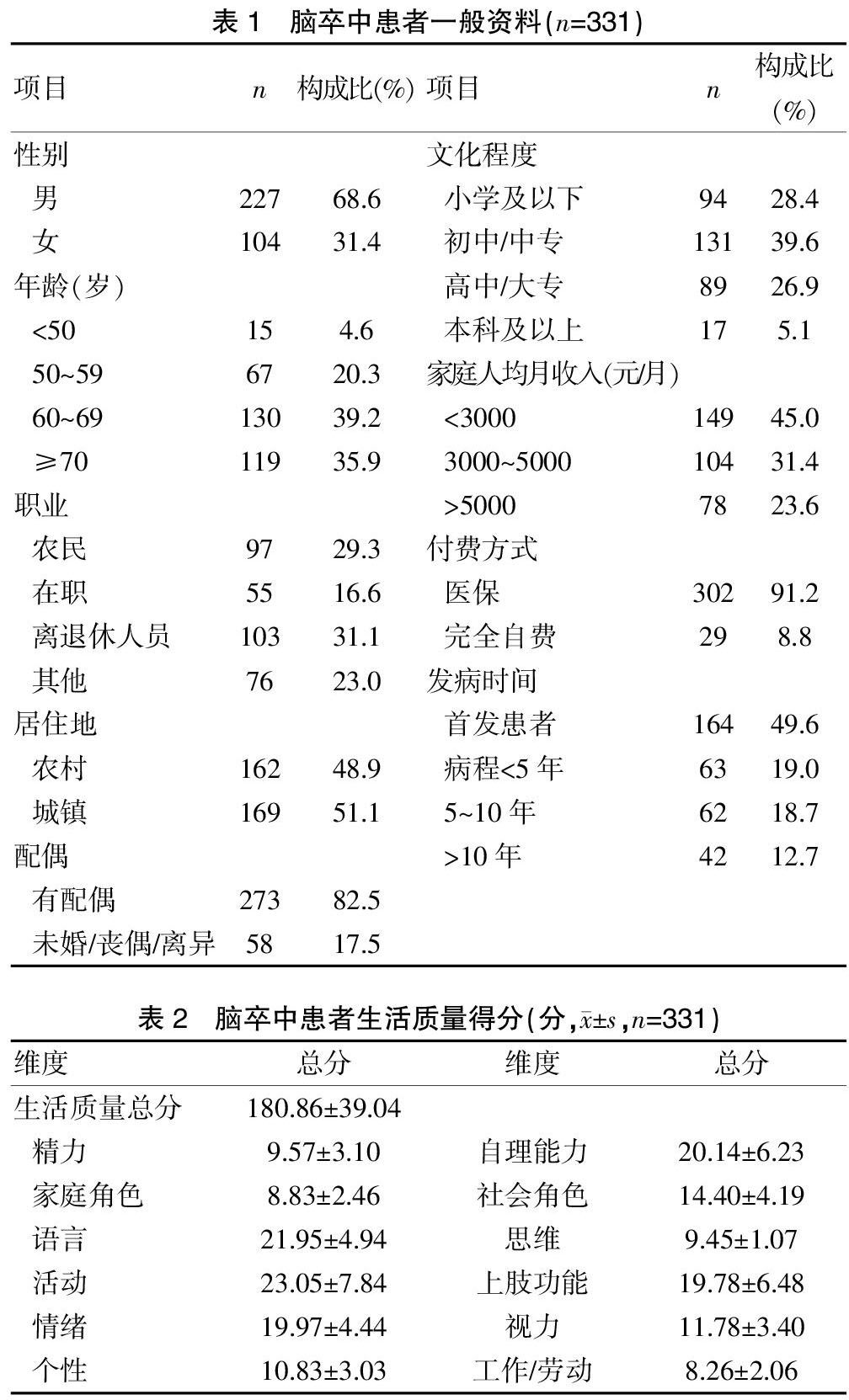
[摘要] 目的 调查脑卒中患者创伤后应激障碍(PTSD)与生活质量现状,并探讨相关性。方法 于2019年2—12月采用便利抽样法抽取331例脑卒中患者,应用创伤后应激性筛查表平民版、脑卒中专用生活质量量表进行调查,用Pearson相关分析检验PTSD与生活质量的相关性。结果 脑卒中患者PTSD总分为(31.21±15.82)分,生活质量总分为(180.86±39.04)分,脑卒中患者PTSD与生活质量水平呈负相关(r=-0.718,P
[关键词] 脑卒中;创伤后应激障碍;生活质量;心理护理
[中图分类号] R471 [文献标识码] B [文章编号] 1673-9701(2022)11-0174-04
[Abstract] Objective To investigate the current situation of post-traumatic stress disorder and quality of life in stroke patients and explore the correlation. Methods From February to December 2019, 331 stroke patients were selected by convenience sampling. The civilian version of the post-traumatic stress screening form and stroke-specific quality of life scale were used for investigation. Pearson correlation analysis was used to examine the correlation between post-traumatic stress disorder and quality of life. Results The total score of post-traumatic stress disorder in stroke patients was (31.21±15.82) points, and the total score of quality of life was (180.86± 39.04)points. There was a negative correlation between post-traumatic stress disorder and quality of life in stroke patients (r=-0.718, P
[Key words] Stroke; Post-traumatic stress disorder; Quality of life; Psychological nursing
全球疾病负担研究显示,2016年我国缺血性脑卒中发病率为276.75/10万[1],40~74岁人群首次脑卒中标准化发病率平均每年增长8.3%[2]。(剩余5541字)
