基于回归分析的环境设计感知要素与审美情感关系研究

打开文本图片集
中图分类号:TU-026 文献标识码:A
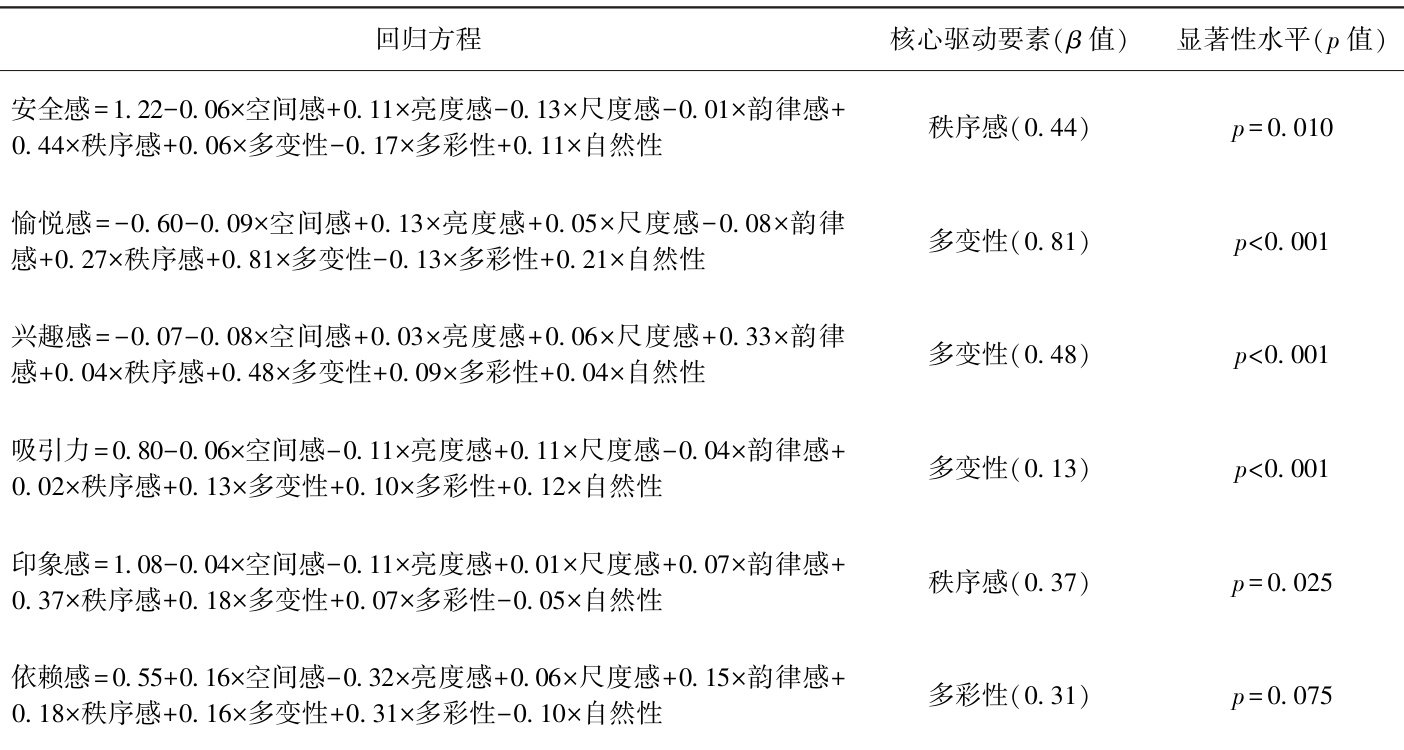
Abstract: The relationship between the perceptual elements of environmental design and aesthetic emotions was explored, providing a basic framework for the application of generative artificial intelligence in architectural and environmental design. Through questionnaire surveys, data on eight perceptual elements including spatial sense, brightness sense, scale sense, rhythm sense, order sense, variability, colorfulness and naturalness, as well as six emotional indicators including security sense, pleasure sense, attractiveness, interest sense, impression sense and dependence sense were collected. The research using multiple linear regression analysis and multi-layer perceptron regression model found that the sense of order significantly enhanced the sense of security, variability and naturalness improved the sense of pleasure, and rhythm and variability stimulated the sense of interest. These results provide a reference for the optimization of generative artificial intelligence algorithms, and are helpful for designing design schemes that are more emotionally resonant and user-centered.
Key words: environment design; perceptual elements; aesthetic emotion; multi-layer perceptron; regression analysis
在建筑与环境设计领域,设计感知元素与审美情感的关联研究具有重要价值[1-2]。(剩余7485字)
