高效液相色谱指纹图谱结合化学模式识别在肉类掺伪鉴别中的应用

打开文本图片集
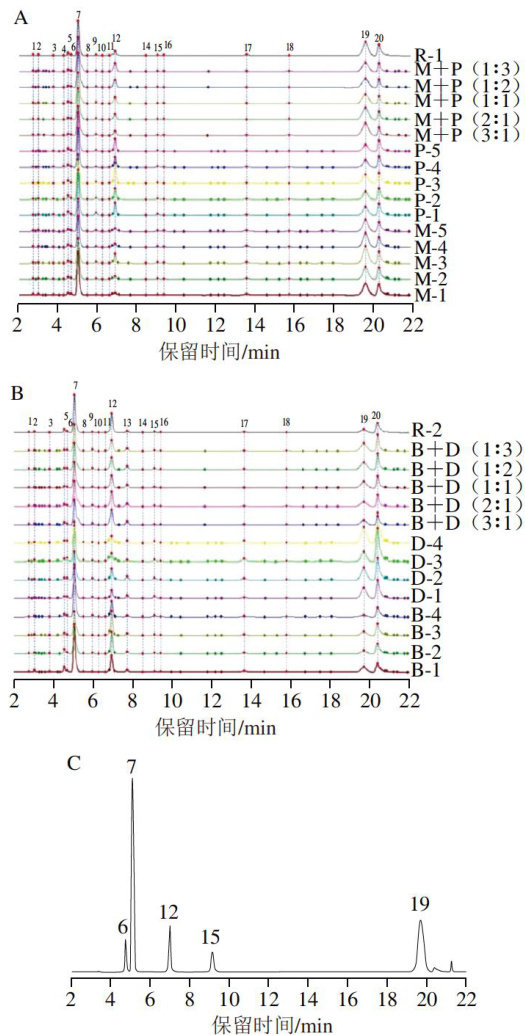
Abstract: Objective: Basedon highperformance liquid chromatography (HPLC),fingerprinting of flavornucleotides in meat was combined with chemicalpatern recognition to identify the adulteration of pork inmuttonand theadulteration of duck in beef. Methods: HPLC fingerprints of flavor nucleotides in mutton-pork systems and beef-duck systems were established respectively.Common peaks were identified and similarity evaluation was carried out.The data of the commonpeaks were analyzed by two pattern recognition algorithms,hierarchicalclustering analysis (HCA)and principal component analysis (PCA).A regresson equation describing the relationship between similarity and the amount of adulteration was fited.Results: A total of 19 common peaks between the flavor nucleotide fingerprints of mutton and pork were found including 5′ -guanosine monophosphate, 5′ -inosine monophosphate,hypoxanthine, 5′ -adenosine monophosphate,and inosine,and the same result was observed between the flavor nucleotide fingerprints of beef andduck.Theresultsof similarityevaluation,HCAandPCAshowed thatthere were significant differences in the flavor nucleotide components betwee muton and pork,and betweenbeef and duck.The developed model showed the negative correlation between similarity and adulteration amount with a correlation coefficient ≥0.99 .This study and real-time fluorescence polymerase chain reaction gave consistent qualitative results for commercial unknown samples.Conclusion: By fingerprinting offlavor nucleotides,similarity analysis and chemical patern recognition analysis,and regression equation fiting between similarity and adulteration amount,meat adulteration could be identified and quantified.
Keywords: meat;adulteration identification;high performance liquidchromatography; nucleotides; fingerprint
DOI:10.7506/rlyj1001-8123-20250429-129
中图分类号:TS251.5 文献标志码:A 文章编号:1001-8123(2026)04-0069-07
牛羊肉营养价值高且味道鲜美,颇受消费者喜爱]。(剩余12193字)