mtDNA的非同义突变与人类有氧耐力的获得及保护

打开文本图片集
中图分类号:G80 文献标识码:A 文章编号:1007-323X(2025)04-0082-09
Mitochondrial DNA Nonsynonymous Mutations and the Acquisition and MaintenanceofHuman Aerobic Endurance
QI Zheng-tangl,²,GAO Jing-yi ⋅I,2 , LIU Wei-na I,2,3
(1.KeyLaboratoryofdolscentHealthssssmetndExerciseItevetioofstryofducatioEastCinaNoalUsit ShanghaiO241,hina;2.SholofPysicalEducationandHealth;EastChinaNoralUniversityhanghi2O41,hina;3.stite of Aging,East China Normal University,Shanghai 2OoO62,China)
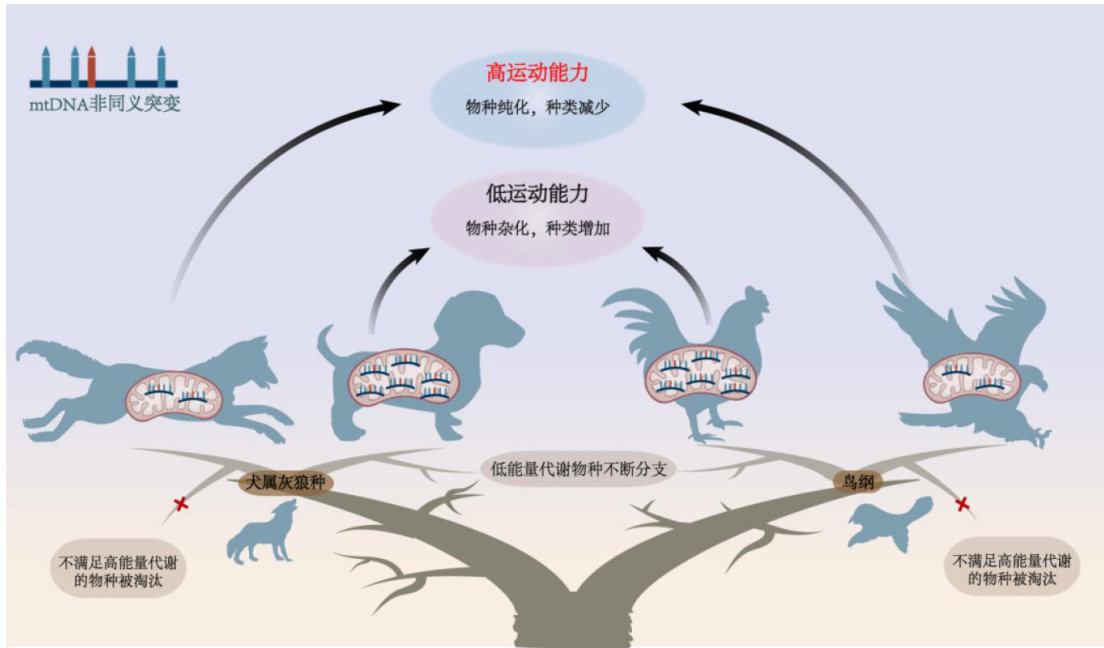
Abstract: Mitochondrial DNA (mtDNA) exhibits high sensitivity to selection pressures related to energy demands and has a high mutation rate.Nonsynonymous mutations have a significant impact on energy metabolism and can reflect to some extent the process of acquiring human aerobic endurance.Studies on mammals and birds have found that the degradation of locomotor ability is associated with the accumulation of mtDNA nonsynonymous mutations after the relaxation of energy metabolic constraints. Compared to other primates, the co-evolution of mtDNA nonsynonymous mutations and nuclear DNA allows humans to selectively acquire aerobic endurance.Due to the easy accessibility of energy and the non-necessity of endurance exercise in modern society, the accumulation of mtDNA nonsynonymous mutations has gradually increased, occupying the gene pool and even triggering more chronic metabolic diseases.Based on the relationship between mtDNA nonsynonymous mutations and the degradation of locomotor ability in mammals and birds, it is suggested that humans set conditions for energy metabolic constraints by themselves, i.e., actively engage in aerobic exercise to maintain the purity of mtDNA, prevent mtDNA nonsynonymous mutations, and sustain human health from both individual and evolutionary time scales.
Keywords: mtDNA; nonsynonymous mutations; human endurance; aerobic exercise; chronic diseases
从进化生物学的视角审视,人类在哺乳动物界被誉为“长跑健将”。(剩余17548字)