东北中生代盆地演化及其对古太平洋板块俯冲的制约

打开文本图片集
中图分类号:P542 文献标志码:A
Abstract: As a key region linking the West Pacific subduction system and the Central Asian orogenic belt,Northeast China witnessed a Mesozoic basins evolution closely related to multi-plate interactions. This study systematically investigates the geodynamic mechanisms of basin formation by analyzing tectonic-stratigraphic characteristics and lithospheric structures of NNE-trending Mesozoic sedimentary basins in Northeast China and adjacent areas,combined with both shallow processes and deep dynamic evolution of plate interactions.The results indicate that the Mesozoic basins in Northeast China exhibit a basin-and-range tectonic pattrn,divided into western,central,and eastern basin groups,with a lithospheric structure thickening westward and thining eastward. The basin evolution progressed through five stages:Early-Middle Triassic erosion and planation,Late Triassic-early Late Jurassic diferential response to dual-sided subduction, Late Jurassic-early Early Cretaceous regional compression,middle-late Early Cretaceous extension dominance,and latest Early Cretaceous-Late Cretaceous alternating compression and extension. The superposition of two tectonic domains 一 the evolving subduction style of the Paleo-Pacific plate and the closure of the Mongol-Okhotsk Oceanconstitutes the core geodynamic control on basin evolution. Specifically,the regional extension triggered by the rollback of the Paleo-Pacific plate was the key driver for basin formation.
Key words:Northeast China;Mesozoic basins; tectonic evolution; Paleo-Pacific plate;Mongol-Okhotsk Ocean;plate subduction
0 引言
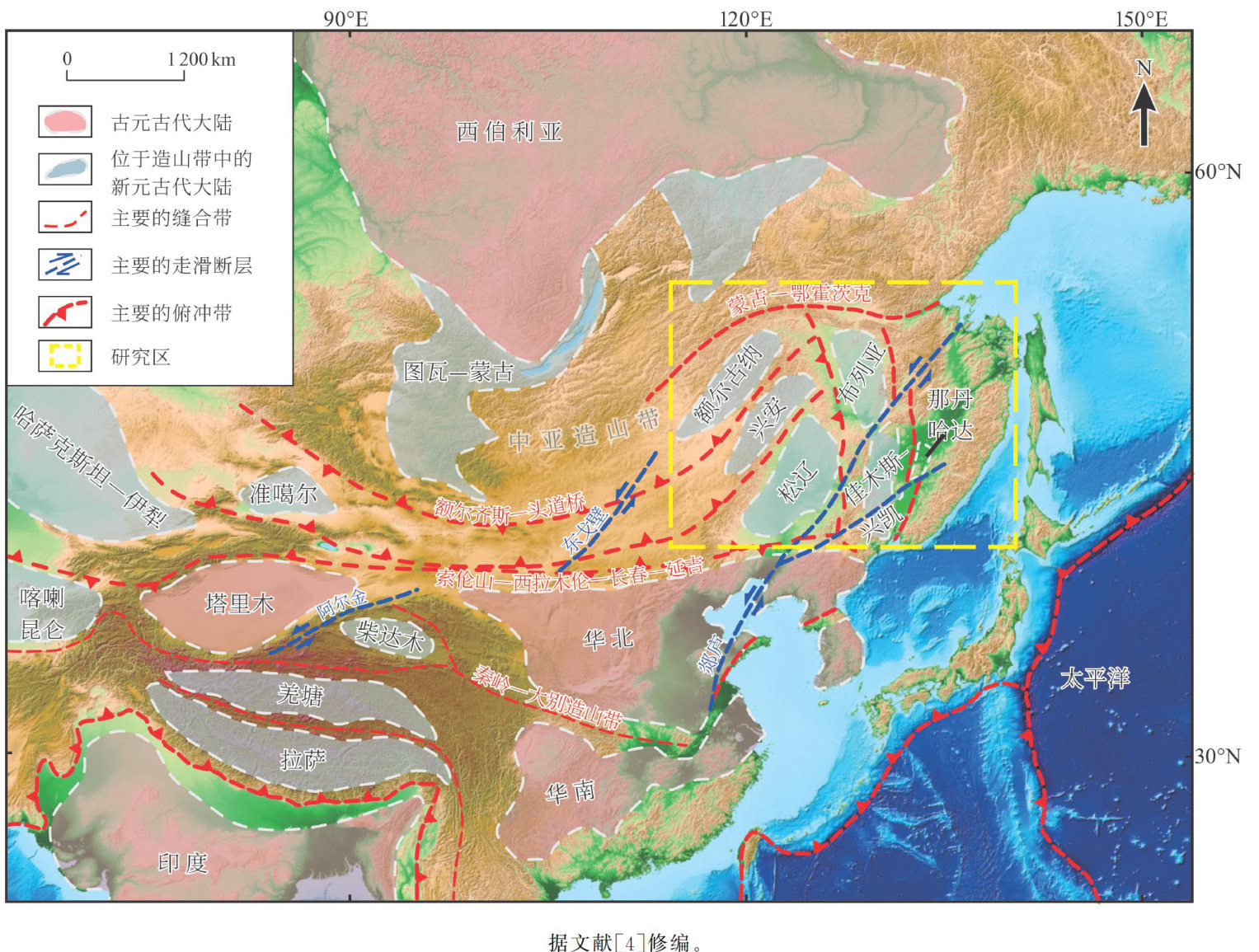
中国东北地区地处中亚造山带(中国境内也被称为北方造山带)东段,是衔接西太平洋俯冲体系与中亚造山带的关键区域,在显生宙期间经历了复杂的大陆增生与多期构造变形过程,其构造演化历史一直是东亚大陆构造研究的核心议题之一[1-5]。(剩余53313字)