舌三针联合头皮针治疗脑卒中后失语症疗效的Meta分析

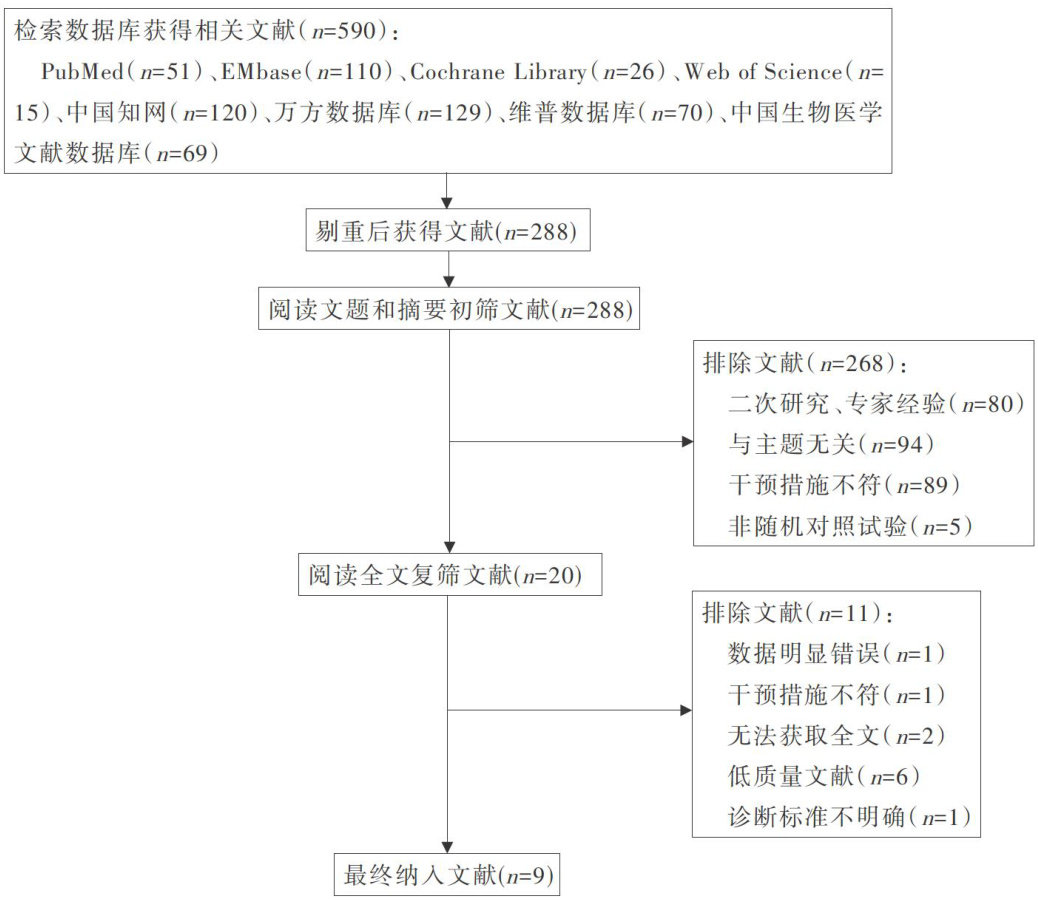
打开文本图片集
AbstractObjective:Tosystematicallevaluatetheclinicaleficacyoftongue-theneedetherapycombinedwithscalpacupunctureat thelanguagecenterreflexzoneinthetreatmentofpoststrokeaphasia.Methods:Relevantrandomizedcontroledtrials(RCTs)were retrieved fromPubMed,EMbase,CochraneLibrary,WebofScience,CNKI,WanFangData,CBM,andVIP.Thesearch periodwas fromtheiceptiofatabsetbr24.seachrsdependentlyedteliteaturetracteddat themethodologicalqualityoftheincluded studies.Meta-analysisandpublicationbias testingwereperformedusingRevMan5.4and ComprehnsiveMeta-AnalysisV3software.Results:AtotalofnineRCTsinvolving595patients.Metaanalysisresultsshowedthatthe total effective rate in the experimental group was significantly higher than that in the control groupl P<0.001 ).The total language function score in the experimental group was significantly higher than that in the control group( P<0.0001 . The scores for spontaneous conversation,ingompreesopitioig,adingdiigiepeimetaloureantl those in the control group P<0.01 ).Conclusions: The existing evidence suggests that tongue-three needle therapy combined with scalp acupuncture atthelanguagecenterreflexzoneisanefective treatmentforpost-strokeaphasia,whichcouldhelpimprovepatients languagefunctionHwever,uetotelimitedumberandqualityofincludedliterature,furtherhighqualtyigorouslysiged,nd stratified-diversified studies are needed for further verification.
Keywordsstroke; aphasia; tongue-three needle; scalp acupuncture; Meta-analysis; evidence-based nursing
脑卒中后失语(post-strokeaphasia,PSA)是指脑卒中损伤优势半球语言功能区导致的语言障碍,表现为自发言语、听理解、复述、命名、阅读和书写不同程度的损害[1]。(剩余11957字)
